
The Mechanism of Dry Needling: Its Efficacy in Alleviating Pain and Accelerating Recovery
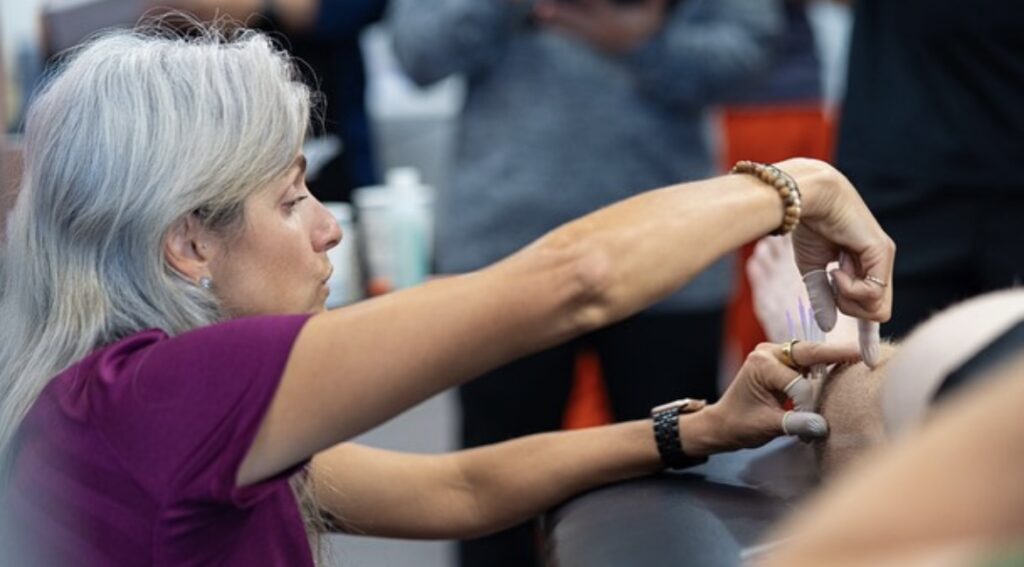
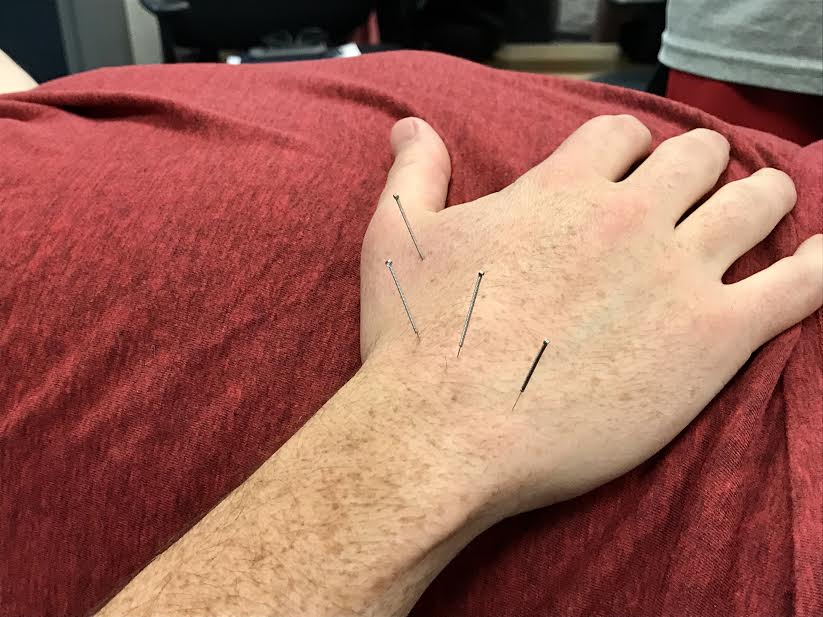
Dry needling (DN) is becoming increasingly used by healthcare providers such as physical therapists, athletic trainers, and chiropractors to treat neuromusculoskeletal pain and movement problems. Physicians need a thorough understanding of the scientific principles behind this technique to use it safely, effectively, and confidently. This review consolidates previous research, primarily from Butts et al. (2016), De Greef et al. (2025), and Cho et al. (2006), to clarify the complex neurophysiological and cellular processes that underlie DN-induced pain relief and tissue healing. 1-3
Historical Context and Evolution of Dry Needling
The practice of dry needling in Western medicine has experienced significant evolution. Dr. Janet Travell and Dr. David Simons were pioneers in the study of myofascial trigger points (MTrPs).4 The term “dry needling” gained prominence following its introduction by Dr. Karel Lewit in 1979, and scholarly interest in the technique has markedly increased over the past few decades. ² Although dry needling and traditional Chinese acupuncture share some similarities, the underlying philosophy of dry needling is primarily grounded in the physiologic effects of the needle, significantly diverging from those of traditional Chinese acupuncture. ¹
A comprehensive study encompassing acupuncture research has enhanced the understanding of the mechanisms of needling. Functional brain imaging methods, such as positron emission tomography (PET) and functional magnetic resonance imaging (fMRI), have provided critical insights into neural responses associated with needling stimulation, demonstrating relationships between peripheral inputs and central brain activity. ³
Early Focus: Pathophysiology of Myofascial Trigger Points (MTrPs)
Much of the early Dry Needling literature focused on MTrPs. Myofascial trigger points are often a significant focus of dry needling. De Greef et al. (2025) define a myofascial trigger point (MTrP) as a “hyperirritable spot in a taut band of skeletal muscle” that induces discomfort, edema, and referred pain in the surrounding region.2 The “Integrated Trigger Point Hypothesis” posits that myofascial trigger points (MTrPs) develop due to excessive acetylcholine (ACh) release at impaired motor endplates, leading to sustained sarcomere contraction, localized ischemia, and a “energy crisis.” This pathogenic cascade ultimately stimulates nociceptors, perpetuating a harmful cycle of pain and inflammation. ²
Further Understanding: Neurophysiological Mechanisms
Dry needling elicits substantial neurophysiological responses that collectively promote analgesia and recovery.
- Spinal Mechanisms and Pain Gate Theory: DN may activate large-diameter afferent nerve fibers thereby obstructing the transmission of pain signals in the spinal cord, consistent with the gate control theory of pain. ¹ This rapid, localized analgesia is a primary mechanism of its efficacy.
- Release of endogenous opioids and neurochemicals. DN is recognized for activating pathways that mitigate pain in conjunction with opioids. This involves the release of endogenous opioid peptides (e.g., endorphins, enkephalins) and other neurochemicals like serotonin and norepinephrine from the brainstem. ¹ Research indicates that DN promotes the release of endogenous opioids, affecting pain perception at several levels of the neurological system. ²
- Modulation of the Central Nervous System (CNS) and Hypothalamic-Pituitary-Adrenal (HPA) Axis: Research utilizing fMRI and PET has highlighted significant central nervous system involvement in reaction to needling. Pain signals activate critical regions of the brain involved in pain processing, including the dorsal, caudal, and rostral anterior cingulate cortex (ACC), supplementary motor and primary motor areas, and the thalamus. ³ Acupuncture-like stimulation (a proxy for DN) has been observed to diminish activity in these pain-processing regions, indicating a desensitization effect at the cortical level. ³ Moreover, needling can activate the hypothalamic-pituitary-adrenal (HPA) axis, which is essential for pain management and stress response. Cho et al. (2006) proposed a “broad sense hypothalamus-pituitary-adrenal (BS-HPA) axis” model illustrating how acupuncture might exert anti-inflammatory and analgesic effects via both humoral factors (such as β-endorphin and glucocorticoids) and neural pathways.
- Neuroimmune Interaction and Cholinergic Anti-inflammatory Pathway: Needling promotes collaboration between the neurological and immunological systems. The vagus nerve helps the body combat inflammation by inhibiting the release of pro-inflammatory cytokines, such as TNF-α and IL-1β, via its cholinergic anti-inflammatory pathway. This neuroimmune communication pathway is a significant component of therapy akin to acupuncture.
- Neuromodulation and neuroplasticity: DN influences neuroplasticity by altering neuronal circuits to reduce central sensitization, a primary contributor to persistent pain. This involves regulating nociceptive pathways and reversing the peripheral hyperalgesia priming induced by protein kinase C (PKC).
Mechanisms of the Placebo Effect: Neuroimaging research demonstrates that the placebo effect, with pain management, can stimulate endogenous opioid synthesis and activate similar brain regions (e.g., rACC) as exogenous opioids. This suggests a common neural mechanism for pain modulation, highlighting the complex central processing involved in needling therapy. ³
Dry Needling: Impact on Cells and Tissues
Besides directly influencing neurons, Dry Needling also impacts cellular and tissue-level systems crucial for recovery:
- Discomfort and Swelling in the Region: The insertion of a needle induces microtrauma, initiating a transient inflammatory response crucial for the regeneration of muscle fibers. Squared DN significantly enhances blood circulation and oxygenation in the region, including areas not associated with MTrPs, which is crucial for tissue repair and alleviating ischemia and hypoxia associated with MTrPs. Squared. The effect is attributed to the overexpression of hypoxia-inducible factor-1 alpha (HIF-1α), vascular endothelial growth factor (VEGF), and inducible nitric oxide synthase (iNOS), which facilitate the formation and dilation of new blood vessels. ²
- Taut Band Resolution: DN has been shown to decrease levels of ACh and acetylcholine receptors (AChRs) in the vicinity of MTrPs while increasing levels of acetylcholinesterase (AChE). This normalizes neuromuscular junction activity and reduces endplate noise.2 This process prevents the sarcomere from continuous contraction, which results in the taut band.
- Facilitating tissue healing and remodeling: DN promotes tissue repair through mechanotransduction. Mechanical stimulation induces fibroblasts to alter their shape and gene expression, facilitating tissue healing and remodeling. ¹⁻² This is particularly crucial for tendon repair, as DN promotes angiogenesis and fibroblast migration, facilitating the restoration of healthy tissue. ¹
Significant Research and Supporting Evidence for Dry Needling
An increasing body of scientific literature robustly endorses the efficacy of dry needling:
- The review by Butts et al. (2016) provides a comprehensive overview of the peripheral and spinal systems and serves as a valuable resource for healthcare professionals. ¹
- De Greef et al. (2025) provide a thorough and contemporary examination of neurophysiological effects, including MTrP disease, highlighting the importance of human-centric research. ²
- Cho et al. (2006) underscore the critical role of the CNS, HPA axis, and neuroimmune interactions, corroborated by fMRI and PET studies that demonstrate distinct brain area activation and deactivation during needling therapy.
- Clinical results from several trials demonstrate reductions in Substance P (SP) and Calcitonin Gene-Related Peptide (CGRP) levels, alongside increases in β-endorphin and autonomic nervous system responses to DN, all of which are associated with pain relief and improved functionality. 2
Practical Implications
This enhanced scientific understanding elevates Dry Needling from a confined method to a powerful neurophysiological modulator. By integrating these evidence-based concepts, practitioners can utilize DN to target specific pain pathways, modify central nervous system responses, influence neuroimmune interactions, and expedite tissue repair. This comprehensive strategy enhances therapeutic techniques, yields superior patient outcomes, and significantly elevates the prestige of practitioners.
In Summary:
Dry needling is an effective treatment because it operates through intricate, interrelated neurophysiological and cellular mechanisms. By embracing this robust scientific foundation, healthcare professionals may utilize DN as a precise, evidence-based tool that enhances safety in administration and improves patient outcomes. Clinicians aspiring to excel in the treatment of musculoskeletal disorders must acquire these principles through recognized, evidence-based education. To receive this industry-leading evidence-based education, visit Structure & Function Education’s® course offerings starting with Foundations in Dry Needling for Orthopedic Rehab & Sports Performance or visit our upcoming courses page.

Brian Hortz, PhD AT
Born in Camden, NJ, Brian received a B.A. in physical education with a concentration in sports medicine from Denison University, a masters degree in sports medicine from Ohio University and his doctoral degree in Exercise Science from Ohio State University. Dr. Hortz is an Instructor and the Director of Research and Education for Structure & Function Education. He has been teaching with Structure & Function Education for several years. Dr. Hortz teaches the Foundations and Advanced courses. In addition to his work with Structure & Function Education, he also has a concierge practice and continues to work one-on-one with athletes to make them well.
References
- Butts R, Dunning J, Perreault T, Mourad F, Grubb M. Peripheral and spinal mechanisms of pain and analgesia with dry needling: A clinical resource for healthcare professionals. Int J Phys Med Rehabil. 2016;4:327.
- De Greef I, Chys M, Gerwin RD, De Meulemeester K, Cagnie B. The Neurophysiological Effects of Dry Needling: An Update of a Narrative Review. Am J Phys Med Rehabil. Published online September 2, 2025. doi:10.1097/PHM.0000000000002855.
- Cho ZH, Hwang SC, Wong EK, Son YD, Kang CK, et al. Neural substrates, empirical evidence, and functional hypotheses concerning acupuncture mechanisms. Acta Neurol Scand. 2006;113:370-377.
- Travell JG, Simons DG, Simons LS. Myofascial Pain and Dysfunction: The Trigger Point Manual. Williams & Wilkins, Baltimore, 1999.