

Dry Needling in Physical Therapy
Dry Needling in Physical Therapy Click here for the most up to date information from the APTA regarding Dry Needling in Physical Therapy.
Dry Needling in Physical Therapy Read More ยป
Dry Needling in Physical Therapy Click here for the most up to date information from the APTA regarding Dry Needling in Physical Therapy.
Dry Needling in Physical Therapy Read More ยป
There is good evidence in the literature supporting physiotherapy in the management of some forms of headache. Dry needling of myofascial trigger points is becoming an increasingly common approach despite a paucity of research evidence supporting its use. The purpose of this review was to determine the evidence supporting the use of dry needling in
Dommerholt J. Full Article Dry needling is a common treatment technique in orthopedic manual physical therapy. Although various dry needling approaches exist, the more common and best supported approach targets myofascial trigger points. This article aims to place trigger point dry needling within the context of pain sciences. From a pain science perspective, trigger points
Peripheral and Central Considerations Read More ยป
Clewley D, Flynn TW, Koppenhaver S. Full Article Study Design Case report. Background Prognosis for adhesive capsulitis has been described as self-limiting and can persist for 1 to 3 years. Conservative treatment that includes physical therapy is commonly advised. Case Description The patient was a 54-year-old woman with primary symptoms of shoulder pain and loss
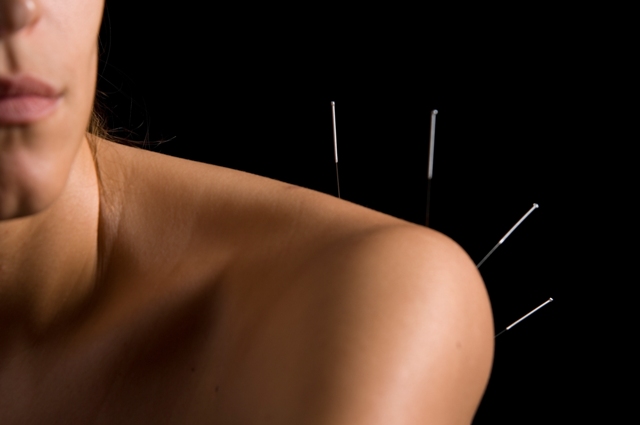
Myofascial pain syndrome (MPS) is associated with hyperalgesic zones in muscle called myofascial trigger points. When palpated, active myofascial trigger points cause local or referred symptoms, including pain. Dry needling involves inserting an acupuncture-like needle into a myofascial trigger point, with the goal of reducing pain and restoring range of motion. The objective of this
Full Article The aim of this systematic review with meta-analysis is to determine the effect of dry needling in the treatment of MTrPs.
Cotchett MP1, Landorf KB, Munteanu SE, Raspovic AM Abstract In order to develop a treatment protocol to evaluate the effectiveness of dry needling for plantar heel pain we conducted a three stage modified Delphi process using a web-based survey technique. Over a series of three iterations, 30 experts (participants) worldwide indicated their level of agreement
Dry Needling is NOT the same as acupuncture. We use the same tool (a fine, filament needle) but the similarities stop there. Acupuncture is rooted in Traditional Chinese Medicine.
What is Dry Needling? Read More ยป
Authors of a new systematic review of neck pain interventions say that while it’s clear more research is needed, there is already moderate-to-strong evidence that both dry needling (DN) and ischemic compression (IC) can lessen pain intensity and increase range of motion, at least in the short-term. Evidence on the treatments’ effects in other areas
In accordance with legislative directives in SB 1154 passed by the Legislature and signed by the Governor in 2014, the Board of Physical Therapy has drafted rules to set standards of education and training for the intervention “Dry Needling”.
Update on AZ Dry Needling Rules and Regulations Read More ยป