
The Multilevel Effectiveness of Needling: Mechanisms, Clinical Translation, and a Three‑Level Curriculum for Clinicians
Dry needling is best comprehended not as a singular, uniform intervention but as a collection of mechanically mediated stimuli that target local tissues, spinal circuits, and supraspinal and systemic networks in distinctive and occasionally synergistic manners. Over the past two decades, the empirical literature has evolved beyond merely documenting clinical effects to examining how needle insertion, manipulation, and electrical stimulation transduce mechanical energy into biologically pertinent signals. Synthesizing these mechanistic insights is imperative for clinicians aiming to align technique and dosage with the physiological drivers underlying a patient’s pain or dysfunction. The following presents a consolidated, evidence-based account of the multilevel effects of needling—based exclusively on the three primary reviews and resources provided—and translates these mechanisms into a coherent curriculum: Foundations of Dry Needling for Orthopedic Rehabilitation and Sports Performance (SFDN1), Advanced Dry Needling: Segmental & Perineural Strategies for the Complex Patient (SFDN2), and Advanced Dry Needling: A Systemic Approach to Orthopedic Rehabilitation and Sports Performance (SFDN3).
Local Physiology: What happens with the local lesion?
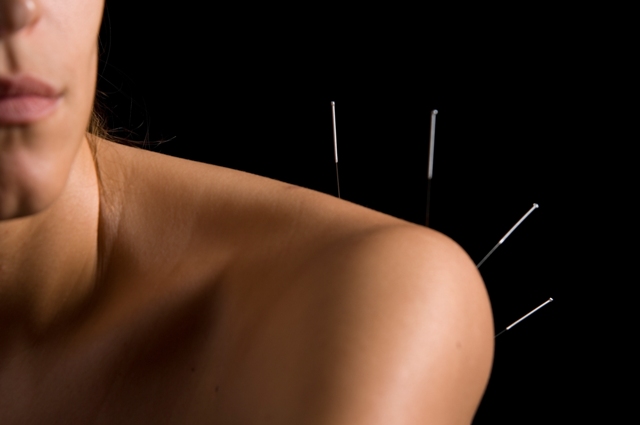
The immediate effect of dry needling primarily targets the peripheral tissue surrounding the needle insertion site. Contemporary research synthesizes this localized lesion within the literature, encompassing pathophysiological mechanisms involving myofascial, circulatory, and neural responses.1-3 The act of needle insertion alone triggers various localized reactions to microtrauma, including modest increases in blood flow and transient inflammatory signaling. However, the dosage and precise placement of the needle critically influence the magnitude and nature of tissue responses that clinicians can utilize. Different needle manipulation techniques, such as rotation or “winding” of an indwelling needle, mechanically link the needle to the surrounding collagen fibers and induce deformation of the extracellular matrix.3 Furthermore, the application of electrical stimulation during controlled needle manipulation can initiate a mechanotransductive cascade: fibroblasts and keratinocytes undergo cytoskeletal deformation and intracellular Ca2+ waves, which stimulate the release of ATP into the interstitial space.1-3 The ATP is rapidly metabolized to adenosine, which, acting through A1 receptors on sensory afferents, functions as a potent local anti‑nociceptive mediator.1-3 Human studies have demonstrated that local needling provides functionally relevant analgesic effects.1
Mast cells hold a crucial role within this peripheral cascade. Mechanical stimulation of connective tissue induces mast cell degranulation, resulting in the release of histamine, ATP, and other mediators that enhance afferent nerve firing and mobilize immune and stromal responses. Experimental inhibition of mast cell degranulation or pharmacologic blockade of H1 and A1 receptors diminishes the analgesic response induced by needling in animal models, underscoring that the peripheral signal is not solely neuronal; non-neural cells are vital transducers and amplifiers of the mechanical stimuli stimulus.3 Together, the collagen–fibroblast–mast cell axis offers a credible mechanism through which appropriately dosed manual needling induces local biochemical normalization (including reduced endplate noise and the restoration of the ACh/AChE balance), enhances perfusion, and causes a shift in nociceptor sensitivity. These changes elucidate many of the immediate clinical effects observed by practitioners.1–3
Spinal processing: Influencing Peripheral and CNS?
Local treatments are necessary, yet often inadequate, to fully elucidate the clinical spectrum of needling outcomes. Peripheral nociceptive stimuli stemming from myofascial or neural dysfunction activate dorsal horn circuitry: persistent C-fiber input, glutamate release, and neuropeptide signaling (such as substance P) sensitize second-order neurons and facilitate NMDA receptor phosphorylation. Sustained nociceptive drive induces molecular and structural alterations in dorsal horn neurons and glial cells, contributing to central sensitization, which manifests as expanded receptive fields, reduced detection thresholds, and persistent symptomatology hyperalgesia.1,2
Paradoxically, the same afferent barrage that constitutes noxious input may also activate inhibitory mechanisms at the spinal level. Needling—particularly when administered with an optimal combination of noxious and non-noxious stimuli—stimulates segmental inhibitory networks. Research involving animal and human studies indicates that mechanical stimulation of the needle activates Aβ, Aδ, and C afferents, which, through a series of interneuronal activations, enhance glycinergic and GABAergic inhibition and facilitate the local release of endogenous opioid peptides (spinal) enkephalins).2 The overall outcome is a localized, segmental suppression of nociceptive transmission; due to the segmental organization of these mechanisms, needling within the affected dermatome, myotome, or sclerotome produces the most pronounced ipsilateral, segmental analgesia.3
Beyond these classical gate-like effects, the spinal cord contains additional modulatory elements pertinent to needling: nociceptin/orphanin FQ (N/OFQ) systems and α2-adrenergic/serotonergic and endocannabinoid pathways can be activated during needling and electro-needling to modify presynaptic glutamate release and postsynaptic responses’ excitability. 2 These spinal actions elucidate why paraspinal or segmentally targeted needling can diminish referred pain and why a treatment strategy that considers spinal segmental relationships is frequently superior to isolated, symptom-focused approaches.
Supraspinal and systemic effects: Influencing the body’s interrelated systems, neuroimmune modulation
The influence of needling extends to supraspinal centers that regulate descending pain modulation. Functional imaging and neurochemical studies demonstrate that stimulation of peripheral afferents by needling activates the arcuate nucleus, periaqueductal gray (PAG), nucleus raphe magnus, and locus coeruleus. These structures coordinate descending serotonergic, noradrenergic, and opioidergic pathways inhibition.1,2 The clinical implication is that needling can temporarily modify central pain processing and cause measurable changes in pain perception beyond the area that was treated.
Equally significant are the neuroendocrine and immune responses associated with specific needling paradigms, notably electro-dry needling (EDN). Experimental models indicate that EDN can activate the hypothalamic–pituitary–adrenal axis, influencing neuroimmune responses, regulating inflammation, cortisol levels, and reducing pro-inflammatory cytokines.2 EDN also interacts with endocannabinoid and oxytocinergic systems: upregulation of CB2 and local anandamide release, as well as oxytocin-mediated modulation of ASIC channels, have been implicated in the reduction of hyperalgesia and in the reversal of hyperalgesic priming in neuropathic models.2 These supraspinal and systemic dimensions offer plausible mechanistic pathways for the anti-inflammatory and longer-range modulatory effects that clinicians occasionally observe following a course of needling.
Technique and Dose: Matching Stimulus to Mechanism
Two practical conclusions can be drawn from the physiology. Firstly, the manner and intensity of stimulation are significant: rotation and winding induce more robust mechanotransduction—including collagen coupling, fibroblast deformation, ATP/adenosine accumulation, and mast cell activation—compared to simple insertion and do so without incurring the mechanical tissue injury associated with repetitive pistoning. 3 Secondly, electrical stimulation of needles (EDN) enables clinicians to adjust and modulate the neurochemical environment, resulting in targeted neurochemical secretion, regulating P2X/P2Y receptor expression, and affecting CGRP/SP dynamics, potentially beneficial for addressing neuropathic pain, osteoarthritis, and chronic inflammatory conditions. This is contingent upon the careful selection of parameters based on physiological intent.2 Therefore, clinical translation requires careful, precise, conservative application, objective monitoring, and adherence to safety standards.1–3
Translating This Evidence into Education: Our Three‑Course Continuum
If needling is to be integrated into evidence‑based orthopedic and sports rehabilitation, education must be structured to teach not only safe technique but also diagnostic reasoning and mechanistic matching. The three‑course SFDN continuum accomplishes this by aligning progressive skill acquisition with progressively complex mechanistic targets.
- SFDN1: Foundations of Dry Needling for Orthopedic Rehab and Sport Performance
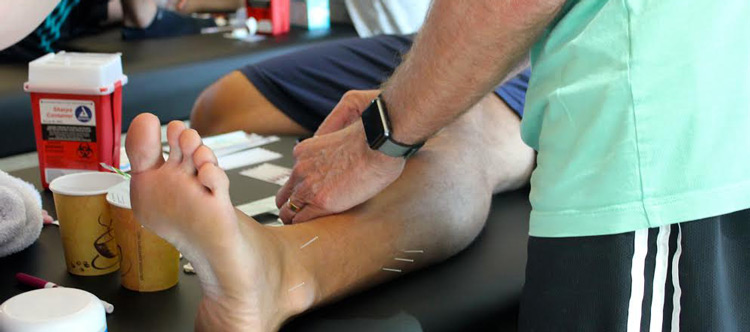
The foundational course emphasizes diagnostic accuracy and safe procedural techniques. Participants are introduced to the local mechanobiology of needling, including connective tissue coupling, mast-cell-mediated ATP and adenosine signaling, as well as the vascular responses that underpin immediate symptom relief. 1,3 Laboratory time emphasizes needle handling, rotation/winding technique, point selection across upper and lower extremities and the spine, and safe introduction to intramuscular electrical stimulation. Because the primary objective in early practice is responsible, effective deployment, SFDN1 also discusses how to pair needling with active rehabilitation to convert transient analgesic windows into strengthened movement patterns and functional gains.
- SFDN2: Advanced Dry Needling: Segmental & Perineural Strategies for the Complex Patient
Building upon foundational principles, SFDN2 contextualizes needling within the framework of spinal and peripheral nerve physiology. The course elucidates methods to identify segmental drivers of peripheral pain, examines how dorsal-horn sensitization modifies clinical presentation, and delineates strategies for paraspinal and perineural interventions that engage spinal opioids, glycinergic inhibition, and targeted neuroimmune modulation. Practical modules encompass techniques such as safe peri-neural and periosteal procedures (e.g., controlled periosteal “pecking” when clinically justified), EDN parameter selection for neuropathic phenotypes, and algorithms for conditions including neuropathy, CRPS, osteoarthritis, and complex spinal pain. Instruction is predominantly case-based, focusing on anatomical landmarking, dose selection, and the integration of needling into comprehensive multimodal care under supervised conditions. 2
- SFDN3: Advanced Dry Needling: A Systemic Approach to Orthopedic Rehabilitation and Sports Performance
The third level focuses on advanced local techniques and systemic modulation pertinent to high-performance rehabilitation and complex conditions. Here, clinicians engage with neuroendocrine topics—such as HPA activation, CRH–POMC local corticosteroid responses, and oxytocinergic and endocannabinoid pathways—and learn to develop protocols that sequence needling, EDN, and progressive neuromuscular training to achieve lasting improvements in performance, recovery, and tissue remodeling. Additionally, SFDN3 encompasses practice-based research literacy, including pragmatic outcome selection, protocol documentation, and the safe testing of hypotheses within clinical settings and populations. 2

Clinical Practice Recommendations
When determining appropriate intervention strategies for a particular patient, clinicians should first identify the predominant underlying mechanism: peripheral biochemical dysfunction, segmental dorsal-horn amplification, systemic/supraspinal modulation, or a combination of these. For isolated, mechanically provoked local pain, needling applied to the affected muscle or local structure, in conjunction with immediate active interventions, will frequently be adequate (SFDN1). In cases where pain is referred, widespread, or associated with spinal pathology or neuropathic characteristics, a segmental approach incorporating paraspinal needling and judicious electrical dry needling (EDN) under SFDN2 protocols is more suitable. For chronic multisystem issues, significant inflammatory burden, or performance enhancement, SFDN3-level techniques that intentionally engage neuroendocrine and systemic pathways—while closely integrating rehabilitation—are recommended. 1–3
Conclusion
Dry needling influences tissue, spinal circuits, and brain–endocrine networks through mechanisms that are both plausible and clinically significant. Recognizing this multi-layered biological interplay enables clinicians to select techniques and dosages tailored to specific physiological targets, to integrate needling with active rehabilitation strategies to reinforce outcomes, and to advance patients through a structured curriculum of escalating mechanistic complexity. The pathway SFDN1→SFDN2→SFDN3 delineated herein offers an educational framework that reflects fundamental physiology and empowers clinicians to translate theoretical insights into safer, more efficacious clinical practice. Are you prepared to translate your understanding into mastery? Explore our comprehensive three-level SFDN curriculum, Foundations of Dry Needling for Orthopedic Rehabilitation and Sports Performance (SFDN1), Advanced Dry Needling: Segmental & Perineural Strategies for the Complex Patient (SFDN2) and Advanced Dry Needling: A Systemic Approach to Orthopedic Rehabilitation and Sports Performance (SFDN3) designed to impart evidence-based needling techniques, safe EDN dosing, and mechanistic clinical reasoning that can be readily applied in clinical practice by Monday morning. Please consult our course catalog or contact our program coordinator to review schedules, continuing education credits, and group options, and secure your place in the upcoming cohort. Availability is limited and tends to fill swiftly.
References
- . De Greef I, Chys M, Gerwin RD, De Meulemeester K, Cagnie B. The Neurophysiological Effects of Dry Needling: An Update of a Narrative Review. Am J Phys Med Rehabil. 2026;105:172–180.
- . Butts R, Dunning J, Perreault T, Mourad F, Grubb M. Peripheral and Spinal Mechanisms of Pain and Dry Needling Mediated Analgesia: A Clinical Resource Guide for Health Care Professionals. Int J Phys Med Rehabil. 2016;4:327.
- Perreault T, Grubb MT, Gendron BC, Perez‑Santiago JC, Flannagan SO. Mechanisms and Dose Parameters of Manual Needle Stimulation: Clinical Considerations — Part 2. Acupuncture in Physiotherapy. 2019;31(1):9–23.

Brian Hortz, PhD AT
Born in Camden, NJ, Brian received a B.A. in physical education with a concentration in sports medicine from Denison University, a masters degree in sports medicine from Ohio University and his doctoral degree in Exercise Science from Ohio State University. Dr. Hortz is an Instructor and the Director of Research and Education for Structure & Function Education. He has been teaching with Structure & Function Education for several years. Dr. Hortz teaches the Foundations and Advanced courses. In addition to his work with Structure & Function Education, he also has a concierge practice and continues to work one-on-one with athletes to make them well.